Nike Dream Crazy: The Ad That Risked Everything and Won
On September 3, 2018, Nike posted a black-and-white close-up photograph of Colin Kaepernick’s face with the words: “Believe in something. Even if it means sacrificing everything. Just Do It.” Within hours, the internet had split. Nike’s stock dropped two percent. Videos of people burning their Nike shoes circulated on social media. The hashtag #BoycottNike trended nationally.
Three days later, Nike aired “Dream Crazy” — a two-minute film narrated by Kaepernick and built around athletes achieving the impossible — and the cultural calculus shifted completely. The full film hit 26 million views in the first week. Nike’s online sales increased 31% in the days immediately following the campaign launch. By the end of 2018, the company’s market value had grown by over $6 billion.
It was, by almost any measure, one of the boldest and most consequential commercial decisions in advertising history.
The Background
Colin Kaepernick had been unsigned in the NFL since March 2017, following a 2016 season in which his decision to kneel during the national anthem in protest of police brutality against Black Americans had made him one of the most polarizing figures in American sports. He was widely believed to have been effectively blacklisted by team owners.
Nike, which had been Kaepernick’s sponsor since he was a college athlete, had maintained a quiet relationship with him through the controversy. When the 30th anniversary of the “Just Do It” campaign approached in 2018, the brand and Wieden+Kennedy faced a decision: who would embody the campaign’s spirit for a new generation?
The choice of Kaepernick was not made lightly. Internal discussions at Nike included analysis of brand risk, demographic targeting, and long-term cultural positioning. The decision ultimately came down to a clear strategic insight: Nike’s core customer — young, diverse, urban, culturally progressive — supported Kaepernick by a significant margin. The people burning Nike shoes were not, by and large, Nike’s primary consumers.
The Film
“Dream Crazy” was directed by Melina Matsoukas, one of the most celebrated music video directors in the industry, known for Beyoncé’s “Formation” and Rihanna’s “We Found Love.” Her visual sensibility gave the film a cinematic quality that elevated it above standard sports advertising.
The film opens with Kaepernick’s voice: “If people say your dreams are crazy — if they laugh at what you think you can do — good. Stay that way.” What follows is a rapid-fire montage of athletes doing seemingly impossible things: a young wrestler with no legs defeating opponents who have four. LeBron James. Serena Williams. A 10-year-old girl who coaches a football team. A woman who runs a marathon after giving birth the day before. A football player who lost his leg playing.
Each individual story was extraordinary on its own terms. Together, assembled with pace and precision, they built toward something bigger than sports — a statement about the relationship between ambition, sacrifice, and identity. Kaepernick’s narration threaded through the images without explaining them, trusting the audience to make the connections.
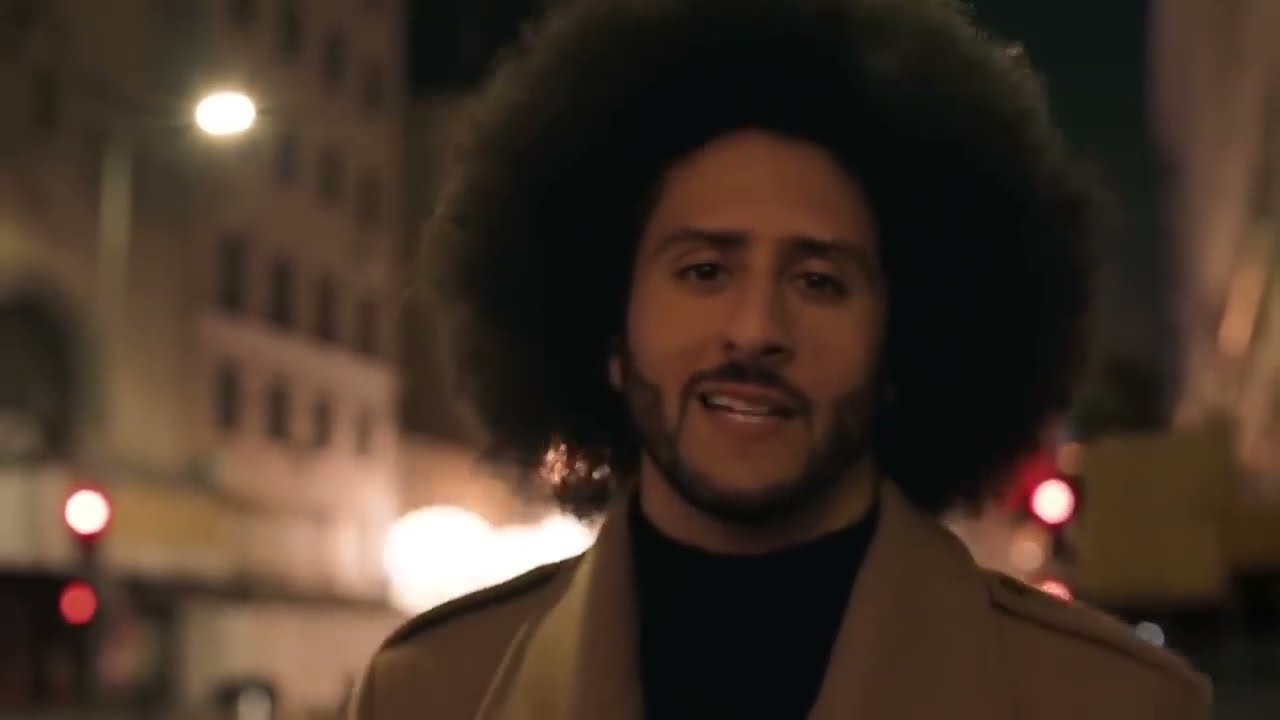
The film’s final image was Kaepernick himself, staring directly into the camera as he delivered the closing line: “Don’t ask if your dreams are crazy. Ask if they’re crazy enough.”
Wieden+Kennedy’s Craft
Wieden+Kennedy Portland has been Nike’s creative partner since 1982 and is responsible for many of the most celebrated advertising campaigns in American history: “Just Do It” itself, “Bo Knows,” “If You Let Me Play,” Michael Jordan’s entire advertising persona. The agency’s relationship with Nike is one of the longest and most creatively productive partnerships in the industry.
For “Dream Crazy,” the team worked to ensure that the political dimension of Kaepernick’s presence was neither minimized nor foregrounded in a way that turned the film into an argument. The goal was to make something that felt true — that honored Kaepernick’s actual sacrifice while building a piece of advertising that could move people who knew little about the NFL controversy.
The result was a film that worked simultaneously as a sports film, a brand film, and a cultural statement — each layer reinforcing the others rather than competing.
The Aftermath
“Dream Crazy” won the Emmy Award for Outstanding Commercial in 2019. It won Cannes Lions. It dominated every major advertising awards season and generated more industry discussion than any commercial of its year.
More significantly, it demonstrated that brand purpose advertising could work even in polarizing territory — perhaps especially in polarizing territory — if the brand was willing to accept that it couldn’t speak to everyone. Nike’s decision was a calculated bet that authenticity and courage would resonate more strongly with its core audience than political neutrality.
It was a bet that paid off in every measurable way, the same way Always’ #LikeAGirl proved that a brand willing to take an unambiguous stance on a cultural issue can build more loyalty than one that plays it safe.
Client: Nike Agency: Wieden+Kennedy Portland Director: Melina Matsoukas Year: 2018
For more on the campaign’s background and reception, see the Wikipedia entry on Nike’s Dream Crazy advertisement.